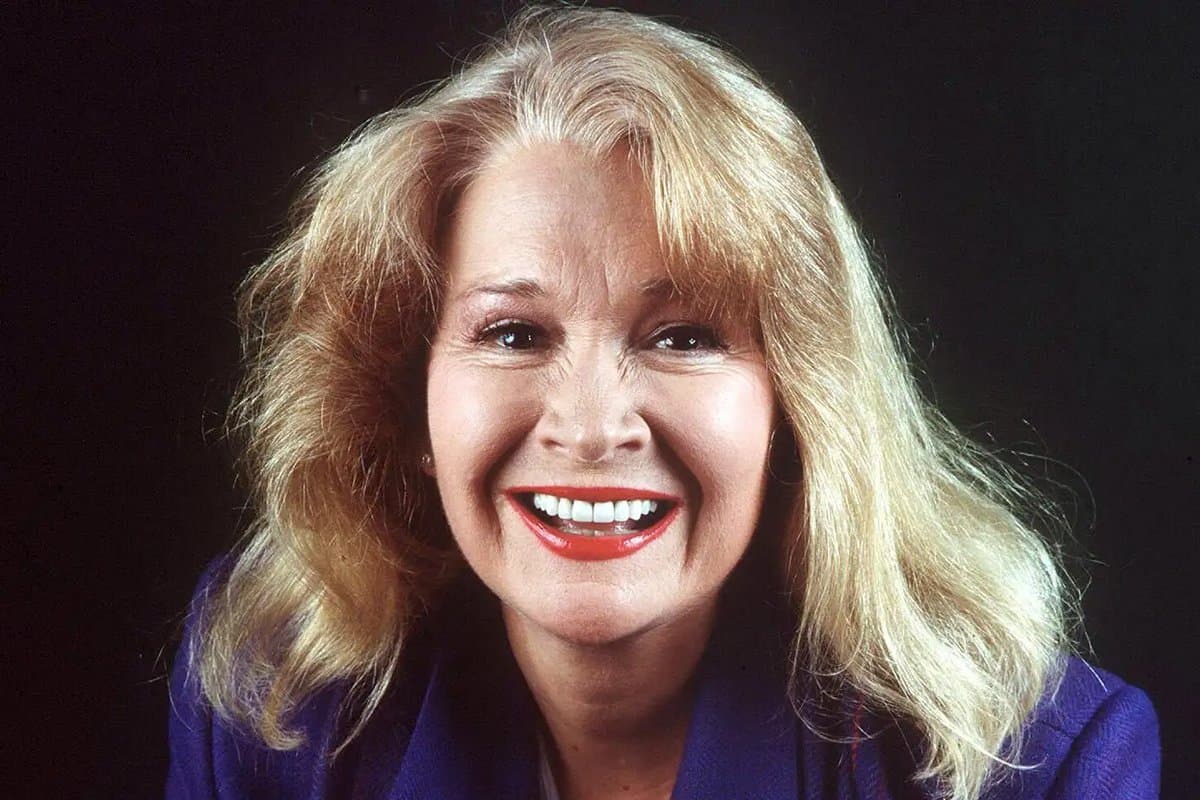

Diane Ladd, the beloved Mississippi-born actress whose career spanned over six decades and included three Academy Award nominations, has died at the age of 89. Her death was confirmed by her daughter, actress Laura Dern, who said her mother passed away peacefully at home in Ojai, California, on Monday, November 3, with family by her side.
“She was the greatest daughter, mother, grandmother, actress, artist, and empathetic spirit that only dreams could have seemingly created,” Dern, 58, said in a statement. “We were blessed to have her. She is flying with her angels now.”
Ladd’s death comes only three months after losing her husband of 26 years, Robert Charles Hunter, former CEO of PepsiCo Food Systems. Hunter died in July at age 77 while visiting family in Fort Worth, Texas. The couple married in 1999 and co-founded Excel Entertainment, their own production company. Hunter even made a brief appearance in David Lynch’s Inland Empire (2006), which starred both Ladd and Dern.
:max_bytes(150000):strip_icc():focal(680x219:682x221):format(webp)/robert-hunter-diane-ladd-2-110325-a4c1d05206bf41ccba7fc908e1271174.jpg)
Diane Ladd and Robert Charles Hunter in 2015.Credit : Nicholas Hunt/Getty
A Versatile Actress With a Storied Career
Known for her ability to embody wildly different characters, Ladd was among the most versatile actresses of her generation. She received three Oscar nominations for supporting roles that showcased her emotional depth and fearlessness.
Her first nomination came for playing Flo, the quick-witted and foulmouthed waitress in Martin Scorsese’s Alice Doesn’t Live Here Anymore (1974), a role that inspired the hit TV series Alice. Ladd’s second nod was for her chilling portrayal of Marietta Fortune, a manipulative Southern matriarch, in David Lynch’s Wild at Heart (1990). Her third and final Oscar nomination was for Rambling Rose (1991), in which she played a compassionate Mississippi housewife who defends her family’s maid.
That film also made history: it marked the first time a real-life mother and daughter — Ladd and Laura Dern — were nominated for Oscars for the same movie. Ladd earned a nomination for Best Supporting Actress, while Dern was up for Best Actress.
Though she never took home the statuette, Ladd was widely regarded as an actor’s actor — respected by peers for her craft and courage to take on challenging, unconventional roles.
From Mississippi to Hollywood Stardom
Born Rose Diane Ladner on November 29, 1935, in Meridian, Mississippi, she was the only child of Preston Paul Ladner, a country veterinarian, and Mary Bernadette Anderson Ladner Garey. Her Southern upbringing deeply influenced her acting style and accent, traits that would later define some of her most iconic roles.
After finishing high school, she moved to New Orleans, under the pretense of attending finishing school — but her true goal was to pursue acting. Her big break came in 1953 when she was discovered performing in a local play and was cast in the touring production of Tobacco Road alongside actor John Carradine.
Ladd later relocated to New York City, working as a model, a Bloomingdale’s product demonstrator, and a Copacabana chorus girl before landing early TV roles on The Naked City and The Walter Winchell File in the 1950s. Her Off-Broadway debut in 1959’s Orpheus Descending caught critical attention and changed her life in more ways than one — not only did it earn her glowing reviews, but it’s also where she met her future husband, actor Bruce Dern.
:max_bytes(150000):strip_icc():focal(666x432:668x434):format(webp)/robert-hunter-diane-ladd-3-110325-c4f37c64411545a89390713d4c971906.jpg)
Diane Ladd and Robert Hunter in 2008. Credit: Jeffrey Mayer/WireImage
Life on Screen and Off
Diane Ladd’s first major film appearance came in Roger Corman’s 1966 biker drama The Wild Angels, opposite Peter Fonda and Bruce Dern. But her true breakthrough was Scorsese’s Alice Doesn’t Live Here Anymore, which showcased her natural charisma and emotional range.
Over the following decades, she appeared in more than 100 film and television projects, including Chinatown (1974), Primary Colors (1998), Ghosts of Mississippi (1996), Joy (2015), and the Hallmark Channel’s Chesapeake Shores (2016–2017).
In addition to her film work, Ladd was also a prolific writer and director. Her 1996 film Mrs. Munck, which she directed and starred in, featured Shelley Winters, Kelly Preston, and Bruce Dern. She later published a spiritual memoir, Spiraling Through the School of Life (2006), and a short story collection, A Bad Afternoon for a Piece of Cake (2016).

Kris Kristofferson and Ms. Ladd in “Alice Doesn’t Live Here Anymore” (1974). Ms. Ladd earned her first Oscar nomination for playing Flo, a sassy Southern waitress.Credit: Bettmann
A Mother-Daughter Bond Beyond Hollywood
Ladd and her daughter, Laura Dern, shared one of Hollywood’s most iconic family partnerships. They appeared together in several projects, including Wild at Heart, Rambling Rose, Citizen Ruth (1996), and HBO’s Enlightened (2011–2013).
Dern often spoke about her mother’s influence on her career — and the complex emotions that came with it.
“I think the quote of my mother’s was, ‘Be a lawyer, be a doctor, be a leper missionary — but don’t be an actress!’” Dern joked in a 2018 interview.
Despite her initial hesitation, Ladd became one of her daughter’s greatest champions. In 2020, when Dern won her first Oscar for Marriage Story, she honored both her parents during her acceptance speech, saying:
“Some say, ‘Never meet your heroes,’ but if you’re really blessed, you get them as your parents.”
In 2023, the two co-authored a bestselling book, Honey, Baby, Mine: A Mother and Daughter Talk Life, Death, Love (and Banana Pudding) — a series of intimate conversations inspired by Ladd’s diagnosis with idiopathic pulmonary fibrosis, a chronic lung disease. Their shared vulnerability in the book offered fans a window into their bond, marked by humor, honesty, and unconditional love.

Ms. Ladd in 2010, when she received a star on the Hollywood Walk of Fame. She could be critical of what she considered corruption in the entertainment industry.Credit...Matt Sayles/Associated Press
Personal Loss and Legacy
Ladd’s later years were marked by both professional recognition and personal loss. Her husband Robert Charles Hunter, whom she married in 1999 after meeting at a spiritual retreat in Arizona, passed away just months before her own death. Together, they shared a deep spiritual connection, producing films and advocating for creative freedom in Hollywood.
Her earlier marriages — first to Bruce Dern (1960–1969) and later to William A. Shea Jr. (1969–1976) — also shaped her life story. Tragedy struck early when her and Dern’s first child, Diane Elizabeth Dern, died in a drowning accident at just 18 months old. Ladd often said the heartbreak shaped her perspective on motherhood and art.
Through her life, Ladd remained a vocal advocate for actors’ rights and integrity in the entertainment industry. “People treat actors worse than they treat children,” she told The New York Times in 1976. “Nothing’s going to be handed to you. You have to fight like a dirty rotten dog.”

Ms. Ladd as a quietly noble Mississippi housewife who defends the family’s indiscreetly sexual young maid (played by her daughter, Ms. Dern, right) in “Rambling Rose” (1991). The movie marked the first time in Oscar history that a real-life mother and daughter had been nominated for the same picture.Credit...New Line Cinema/Everett Collection
A Lasting Impact
Ladd’s final screen role was in the film The Last Full Measure and an upcoming posthumous appearance in Blue Champagne, directed by Blaine Novak. She leaves behind a remarkable artistic legacy and a family deeply rooted in cinema.
In addition to her daughter, Ladd is survived by her grandchildren, Ellery Walker Harper and Jaya Harper.
A performer of extraordinary range and soul, Diane Ladd transformed every role she touched. Her legacy endures not just through her iconic performances but through the family, wisdom, and authenticity she shared with the world.